There’s a strange kind of pressure that comes with being capable.
When you’re the dependable one, the responsible one, the leader, the problem solver, people naturally start bringing things to you. Over time, you get used to carrying it all. In fact, after a while, carrying everything starts to feel normal.
You answer the emails.
You solve the problems.
You step in when others drop the ball.
You keep the project moving.
You remember the details nobody else notices.
You become the person everyone relies on.
And for many years, I convinced myself that this constant state of motion was simply what leadership looked like.
Productivity became tied to my sense of worth in ways I didn’t fully recognize.
If I was resting, I felt behind.
If I slowed down, I felt guilty.
If I spent time reading, thinking, reflecting, or learning during the workday, part of me felt like I should be “doing something.”
But recently, I’ve started questioning that mindset.
Not because I suddenly became lazy or less ambitious. Honestly, it’s the opposite. I think I’m finally beginning to understand what sustainable leadership actually requires.
I realized something that sounds simple but hit me deeply:
Everything is never done.
There will always be another email.
Another meeting.
Another deadline.
Another request.
Another issue to solve.
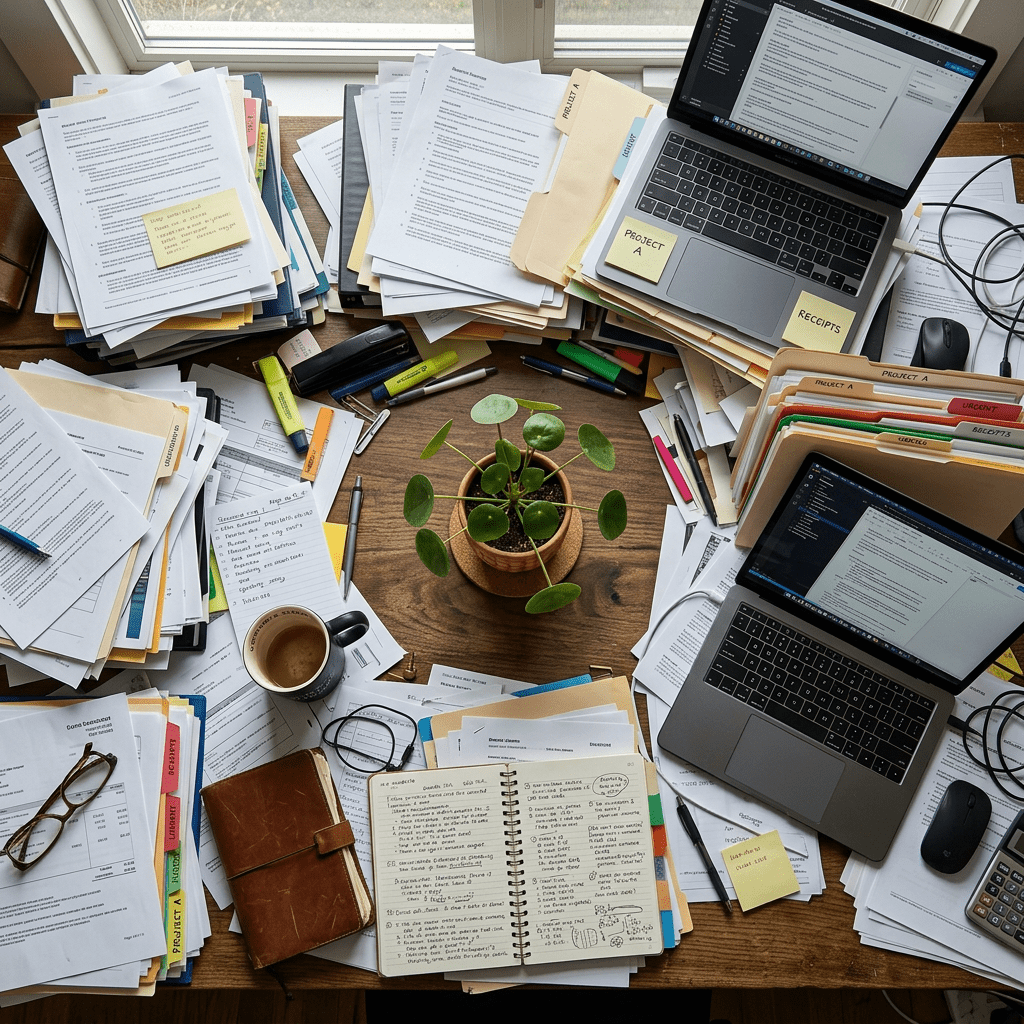
The to do list regenerates itself faster than we can clear it.
And if we are not careful, we can spend years living in reaction mode. Constantly responding. Constantly executing. Constantly putting out fires while slowly losing connection with ourselves in the process.
I think a lot of high-achieving women live this way without even noticing it.
We become so accustomed to being needed that we stop asking ourselves what we need.
We tell ourselves we’ll rest later.
Think later.
Reflect later.
Create later.
Learn later.
But “later” has a way of never arriving.
For me, this realization became especially clear at work. I noticed that when I walked into the office, I immediately felt pressure. Not necessarily because someone was demanding it from me directly, but because of the mental weight I was carrying. There was this internal belief that if I was physically at work, every second should be spent actively producing.
Reading articles related to leadership or operations felt indulgent. Taking time to think strategically felt unproductive. Even clearing my inbox thoughtfully instead of deleting messages quickly sometimes made me feel guilty.
Meanwhile, I was exhausted.
And the truth is, exhaustion had quietly become something I associated with dedication.
I had to stop believing that exhaustion was proof of dedication.
That one took time.
Because many women who lead have been conditioned to believe that our value comes from how much we can carry. The more pressure we withstand, the more valuable we must be. The more exhausted we are, the harder we must be working.
But surviving through over-functioning is not the same thing as leading strategically.
That realization changed something in me.
I started understanding that leadership is not just execution and staying busy. Leadership also requires space. The space to think, observe, improve systems, mentor, learn, and to ask better questions.
Some of the most valuable work I can do now doesn’t always look “busy.”
Sometimes the most important thing I can do is pause long enough to think clearly.
Sometimes it’s reading something that expands my perspective, mentoring someone, writing, reflecting before reacting, and most importantly protecting my peace instead of immediately absorbing everyone else’s urgency.
Protecting my peace and clarity is part of leadership.
That sentence would have been hard for an earlier version of me to fully accept.
But now I understand that clarity affects everything. It affects how we lead teams, communicate with people we love, solve problems, make decisions, and show up for ourselves.
When we operate in constant overwhelm, we become reactive instead of intentional.
We lose creativity.
We lose perspective.
We lose patience.
We lose joy.
And eventually, we can lose ourselves.
The hard part is that high-achieving women are often praised for overextending themselves. People admire how much we can handle. We become known as the person who “always gets it done.”
But just because I’m capable of carrying everything doesn’t mean I should.
I’m learning that there’s wisdom in creating room for myself before burnout forces me to.
Room to breathe.
Room to think.
Room to evolve.
Room to become more than just someone who executes tasks efficiently.
Because my value is not based on constant busyness.
And neither is yours.
You can be responsible and still rest.
You can be ambitious and still protect your energy.
You can be committed and still create boundaries.
You can care deeply about your work without sacrificing yourself in the process.
In fact, I’m beginning to believe that the healthiest leaders are not the ones constantly running at full speed. They are the ones who understand when to slow down enough to lead with clarity instead of exhaustion.
That doesn’t mean abandoning responsibility. It means honoring responsibility in a healthier way.
It means understanding that your mind, your peace, your energy, and your ability to think clearly are not distractions from leadership.
They are part of it.
And maybe growth looks less like proving how much we can carry and more like learning what we no longer need to carry alone.
Life is short.
There will always be work to do.
There will always be another list waiting.
But there should also be room for you somewhere inside the life you are building.


Leave a Reply